
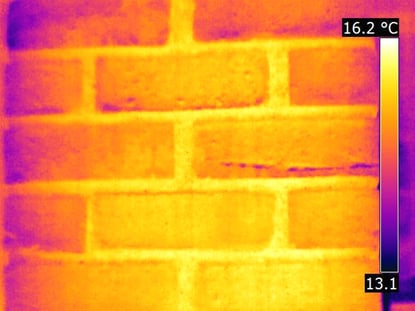
 Moisture inspections often involve more than spotting visible damage. Inspectors rely on a mix of visual cues, surface conditions, and measurement tools to understand what may be happening behind finishes.Infrared readings can add useful context during that process, but they are often misunderstood. Surface temperature changes may point toward evaporation or uneven drying, yet they do not confirm the presence of liquid water. When those signals are misread, inspection findings can become unclear.
An infrared moisture meter measures surface temperature differences that may be associated with moisture activity. Unlike pin or pinless meters, it does not measure moisture content within a material. Its value lies in highlighting areas that warrant closer attention.
This guide explains how infrared moisture meters work, how they differ from thermal imaging tools, and how flood inspectors use them alongside other instruments during moisture assessments.
What Infrared Moisture Meters Measure (and What They Don’t)
Infrared moisture meters do not measure moisture content inside a material. Instead, they measure surface temperature at a specific point.
That distinction matters early in an inspection.
Temperature differences across a surface can point to evaporation, cooling, or uneven drying. These conditions often occur where moisture is present, but they can also appear for other reasons. An infrared reading highlights where conditions differ, not why they differ.
What Infrared Readings Can Indicate
Infrared measurements are useful for identifying:
- Cooler surface areas linked to evaporation
- Temperature variations across walls, floors, or ceilings
- Sections of a structure drying at different rates
These patterns help inspectors decide where closer evaluation is warranted.
What Infrared Readings Cannot Confirm
An infrared moisture meter does not:
- Detect liquid water directly
- Measure moisture content within materials
- Distinguish between moisture-related cooling and other temperature influences
Air movement, insulation gaps, and shading can all affect surface temperature. For that reason, infrared findings work best when paired with other measurement tools.
Infrared Moisture Meters vs. Thermal Imaging Cameras
Infrared moisture meters and thermal imaging cameras are often discussed together, but they serve different purposes during a moisture inspection.
Both rely on temperature data. How that data is presented, and how it is used, separates the two tools.
How Thermal Imaging Is Used in Moisture Inspections
Thermal imaging cameras display temperature differences across a surface as a visual image. These images make it easier to scan large areas quickly and spot patterns that might otherwise be missed.
Inspectors commonly use thermal imaging to:
- Identify temperature anomalies across walls or ceilings
- Locate areas that warrant closer investigation
- Guide non-invasive follow-up testing
Thermal images provide strong visual direction, especially during initial walkthroughs.
Where Thermal Imaging Has Limits
Temperature differences alone do not confirm moisture. Similar patterns can appear due to:
- Air movement
- Insulation gaps
- Shading or exterior exposure
- HVAC operation
Without follow-up measurement, thermal images can lead to false assumptions about moisture presence.
How Infrared Moisture Meters Fit Differently
An infrared moisture meter provides a numeric surface temperature reading rather than a visual image. That allows inspectors to compare specific locations and track temperature variation more precisely.
Because readings are point-based, infrared moisture meters are often used to:
- Spot-check areas identified during screening
- Compare surfaces under similar conditions
- Support decisions about where further testing is needed
Infrared readings help narrow focus when visual imaging alone is not enough.

How Flood Inspectors Use Infrared Moisture Meters in the Field
Infrared moisture meters are often used early in a flood inspection, before invasive testing begins. They help inspectors move through a space efficiently while keeping finishes intact.
Rather than confirming moisture, these readings help narrow attention to areas that behave differently from their surroundings.
Initial Walkthrough and Screening
During an initial walkthrough, inspectors may take surface temperature readings across walls, floors, and ceilings. Small temperature differences can point to areas where evaporation or uneven drying may be occurring.
These readings help guide where closer inspection is warranted without committing to material removal too early.
Verifying Drying Progress
Infrared moisture meters are also used during follow-up visits. By comparing surface temperatures over time, inspectors can observe whether materials are drying consistently or lagging behind surrounding areas.
Unexpected temperature patterns may indicate retained moisture or airflow issues that require further evaluation.
Deciding When to Confirm with Other Tools
Infrared readings often prompt follow-up checks using pin or pinless moisture meters. This step helps determine whether temperature variation is tied to moisture within the material or another condition.
Because infrared readings are quick to capture, they support informed decisions about where confirmation testing is needed during each stage of an inspection.
Choosing an Infrared Moisture Meter for Flood Inspection Work
Flood inspections move quickly and rarely follow a clean script. Infrared moisture meters need to support fast decisions while working across different materials and conditions.
Rather than comparing feature lists, inspectors often focus on how a meter performs during real inspection scenarios.
|
Consideration |
Why It Matters During Flood Inspections |
|
Surface temperature range |
Supports reliable readings across wet, dry, and transitional areas |
|
Measurement resolution |
Helps detect small temperature differences tied to uneven drying |
|
Response time |
Allows quick spot checks without slowing inspections |
|
Ease of operation |
Reduces interruptions when switching between tools |
|
Durability |
Withstands moisture exposure and frequent handling |
|
Cost expectations |
Reflects how often the tool will be used within an inspection workflow |
Where Infrared Moisture Meters Fit in a Complete Moisture Assessment
Moisture assessments rely on more than a single measurement. Flood inspectors typically move between tools as conditions change across a structure.
Infrared moisture meters support that process by helping narrow attention before material testing begins.
Supporting Early Screening
Infrared readings are often taken during initial walkthroughs to identify surface temperature variation. These readings help inspectors focus on areas that may require closer inspection without disturbing finishes.
This approach supports faster movement through large or complex spaces.
Pairing Infrared with Pinless Scanning
Once an area shows temperature variation, pinless moisture meters are commonly used to assess moisture presence below the surface. Broad scanning helps confirm whether temperature differences align with moisture patterns within materials.
This step adds context to infrared readings without damaging surfaces.
Confirming Conditions with Pin Measurements
Pin measurements are typically used when confirmation is needed at a specific location. These readings help determine moisture content at a defined point once other tools have narrowed the search.
Making Sense of Infrared Moisture Meter Readings in Flood Work
An infrared moisture meter provides surface temperature data that can help flood inspectors identify areas that behave differently during drying. These readings support early screening without disturbing materials.
When used with pinless and pin measurements, infrared data helps guide where confirmation is needed. Understanding how an infrared moisture meter fits into flood work supports consistent interpretation during inspections.
Take a Closer Look at Condensation in Buildings
Infrared temperature readings often lead inspectors to questions about condensation. This guide walks through how surface temperature and humidity readings are used together during real building inspections.
