
Finding the right moisture meter for leak detection matters when decisions need to be made without opening walls or pulling up flooring. Inspectors and restorers rely on readings that point them in the right direction while keeping disruption low. The wrong tool can slow that process or lead to uncertainty.
Leak detection rarely starts with a visible problem. Moisture often moves behind surfaces and spreads through materials before any damage appears. That makes accurate measurement and clear interpretation part of everyday field work.
Understanding what a meter can show and what it cannot helps narrow the search early.
This article explains how moisture meters fit into leak detection work, the types of tools commonly used, and what to look for when choosing equipment for real inspection conditions.
Can a Moisture Meter Detect a Leak?
A moisture meter does not directly confirm a leak. Instead, it provides data that helps narrow down where moisture is present and how it may be moving within a structure. This allows inspectors to focus their investigation without opening walls or removing flooring too early.
A moisture meter supports leak detection by helping to:
- Identify areas with elevated moisture levels
- Track moisture patterns across surfaces and materials
- Reduce guesswork during early inspection stages
- Guide further testing or selective access when needed
Context still matters. Moisture readings can reflect condensation, prior exposure, or environmental conditions rather than an active leak. The value of a moisture meter comes from combining its readings with an understanding of the building and the conditions at the time of inspection.
Types of Moisture Meters Used for Leak Detection
Different moisture meters serve different purposes during a leak investigation. Some help confirm moisture at a specific point, while others are better suited for scanning larger areas to identify patterns. Knowing how each type works makes it easier to choose the right approach for the situation.
Pin Meters
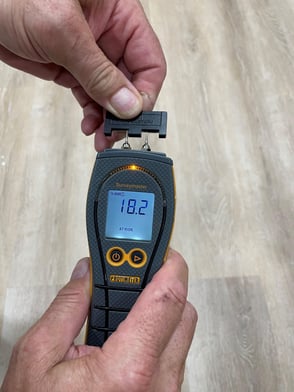
Pin meters measure moisture through electrical resistance between two probes inserted into the material. Higher resistance changes point to elevated moisture levels at that exact location. These meters work well when confirmation is needed in a targeted area, such as trim, framing, or exposed wood components.
Because pin meters measure a small contact area, they are best used after a broader scan has already narrowed the search. Material density and surface hardness can affect readings, so results should always be viewed in context.
Pinless Moisture Meters
Pinless meters scan moisture below the surface using electromagnetic signals. This allows inspectors to assess a wider area quickly without penetrating finishes. They are commonly used to map moisture patterns across walls, floors, and ceilings.
Depth of reading varies by model and material type. Dense substrates or layered assemblies can influence results, which is why pinless scans are often followed by targeted verification when needed.
Thermal Moisture Meters and Multi-Function Instruments
Thermal tools show surface temperature differences that may relate to moisture movement. Cooler areas can highlight sections that warrant closer attention, though temperature variation alone does not confirm moisture presence.
When thermal cues are paired with non-invasive moisture measurements, inspectors gain clearer direction during screening. If a thermal camera is not available, pinless scanning combined with focused follow-up readings can still support a solid, non-destructive workflow.
What Tools Are Used to Detect Water Leaks in Walls?
Detecting water leaks inside walls relies on tools that help narrow the search before any material is disturbed. Inspectors often use a small set of instruments together, depending on access, materials, and site conditions.
Moisture Meters
Moisture meters are the primary tools used to detect water leaks in walls. A moisture meter for walls helps identify elevated moisture behind drywall, plaster, and other finishes without immediate removal.
They are commonly used to:
- Scan large wall areas for moisture patterns
- Compare readings across materials
- Confirm moisture levels at specific locations
A pinless moisture meter is often used first for broad scanning. Targeted pin readings may follow to verify moisture at a specific point once an area of interest is identified.
Thermal Imaging Cameras
Thermal imaging cameras are used as screening tools during leak investigations. They display surface temperature differences that may suggest moisture movement within a wall assembly.
They are typically used to:
- Highlight areas that may warrant closer inspection
- Support broad screening during initial surveys
- Guide follow-up checks with moisture meters
Temperature differences alone do not confirm moisture. Airflow, insulation gaps, or shading can produce similar patterns. For that reason, thermal findings are usually verified with a water damage moisture meter. When a thermal camera is not available, non-invasive moisture scanning can still guide the inspection.
Environmental Measurement Tools
Environmental instruments help provide context for moisture readings taken inside walls. These tools are used to assess conditions that may influence results.
They help inspectors account for factors such as:
- Indoor humidity levels
- Temperature differences across spaces
- Conditions that may contribute to condensation
Using these tools alongside moisture meters helps clarify whether readings point toward an active leak or an environmental cause.
5 Tips for Detecting Moisture Behind Walls
Detecting moisture behind finished surfaces works best when inspections follow a clear, non-invasive process. These tips help narrow the search before any material is disturbed.
-
Start with broad scans: Use a pinless moisture meter to scan a wide area and look for patterns rather than isolated readings.
-
Compare adjacent areas: Moisture differences between similar sections of wall often reveal where water may be traveling.
-
Watch for moisture gradients: A gradual change in readings usually provides more insight than a single high number.
-
Confirm with targeted readings: Once an area of interest is identified, use pin measurements to check moisture at specific points.
-
Recheck under consistent conditions: Follow-up readings taken under similar conditions help confirm whether moisture is ongoing or residual.
How Do You Choose a Moisture Meter for Leak Detection?
Choosing a moisture meter for leak detection comes down to how the tool performs in real inspection conditions. Different jobs call for different capabilities, so it helps to focus on how the meter will be used rather than relying on specifications alone.
When comparing options, inspectors often look at:
- Measurement depth.
Deeper readings help identify moisture behind finishes and within assemblies where surface checks fall short. - Scanning capability.
Pinless scanning supports faster surveys and makes it easier to spot moisture patterns across walls and floors. - Targeted verification.
Pin measurement allows confirmation at specific points once an area of interest is identified. - Consistency across materials.
Reliable readings across drywall, wood, and masonry reduce uncertainty during mixed-material inspections. - Usability in the field.
Clear displays, simple controls, and durable construction support long inspection days and repeat use.
No single meter fits every situation. Many professionals rely on more than one tool to balance speed, confirmation, and depth depending on the structure and conditions they are working in.
Moisture Meter Categories Used by Professionals
Professionals often group moisture meters by how they support different stages of leak detection rather than by brand or feature set. Viewing tools this way helps clarify where each category fits into a typical inspection workflow.
|
Moisture Meter Category |
Where It Fits in an Inspection |
Example |
|
Dual-Mode Meters (Pin + Pinless) |
Used when inspections require both broad scanning and targeted confirmation without switching tools. Supports flexible workflows across multiple materials. |
|
|
Deep-Reading Pinless Meters |
Used for non-invasive scanning beneath finished surfaces to identify moisture patterns early in the inspection process. |
|
|
Multi-Function Measurement Systems |
Used when moisture readings need to be evaluated alongside environmental conditions such as humidity and temperature. Supports documentation and longer assessments. |
Approaching Leak Detection with the Right Tools
Effective leak detection starts with reliable information and a clear understanding of what moisture data represents. Moisture meters support that process by helping inspectors narrow the search and confirm conditions without unnecessary disruption.
When tools are selected with real inspection conditions in mind, moisture readings become easier to interpret and apply. That clarity helps inspectors move forward with confidence and make informed decisions as the investigation progresses.
Take the Guesswork Out of Moisture Meter Selection
Browse moisture meters by application or function to find tools that match the way you approach leak detection.
